Legacy Application Modernization
Legacy application modernization services that reduce technical debt and modernize architecture without breaking what your business depends on: reengineering, containerization, mainframe and cloud migration.


Our legacy application modernization services help you reduce technical debt and adopt modern architecture without disrupting the systems your business runs on. We assess before we touch anything, modernize in controlled increments and keep the business operating throughout.
Our Core Capabilities
Modernization We Deliver
Our Suite of Legacy Application Modernization Services
From the first assessment to a stabilized, modern architecture, our modernization services cover the full journey. We map what exists, modernize in increments that keep working software running, and validate every step before moving to the next.
Modernization Consulting & Roadmap
We assess your legacy portfolio and build a phased roadmap that sequences modernization around business risk, not just technical convenience.
Dependencies, risks and technical debt mapped before any change is planned.
A sequenced plan that fits your release cycles and business calendar.
Application Reengineering & Refactoring
We restructure legacy code and architecture to remove technical debt while preserving the business logic that already works.
Modular architecture that replaces tangled, hard-to-change code.
Changes made in reviewable steps, not one disruptive rewrite.
Containerization & Microservices
Legacy applications packaged into containers and, where it makes sense, decomposed into microservices for portability and independent scaling.
Consistent, portable deployments across environments.
Monoliths split where it reduces risk and speeds up delivery.
Mainframe Modernization
Mainframe workloads assessed and modernized in controlled phases, keeping critical batch and transaction processing stable throughout.
Understand what each mainframe workload does before changing it.
Workloads modernized or extracted incrementally, not all at once.
Infrastructure Modernization
Aging infrastructure replaced with automated, version-controlled environments that are easier to operate and scale.
Environments defined in code instead of manual, undocumented setup.
Repeatable environments that reduce configuration drift.
Cloud Migration & Cloud-Native Architecture
Applications migrated to the cloud through the approach that fits each system: rehost, replatform or rearchitect for cloud-native.
The right mix of rehost, replatform and rearchitect for each application.
Elastic, managed-service-based architecture where it earns its complexity.
DevOps & CI/CD Enablement
Modernized applications get automated build, test and release pipelines, so the improvements in architecture translate into faster, safer releases.
Automated builds, tests and deployments for the modernized system.
Visibility into the modernized system from day one of production use.
Post-Modernization Support & Stabilization
A dedicated stabilization period after cutover, with close monitoring and rapid fixes, before the system moves to standard support.
Focused support in the weeks after go-live, when issues surface fastest.
Continued monitoring, patching and improvement after stabilization.
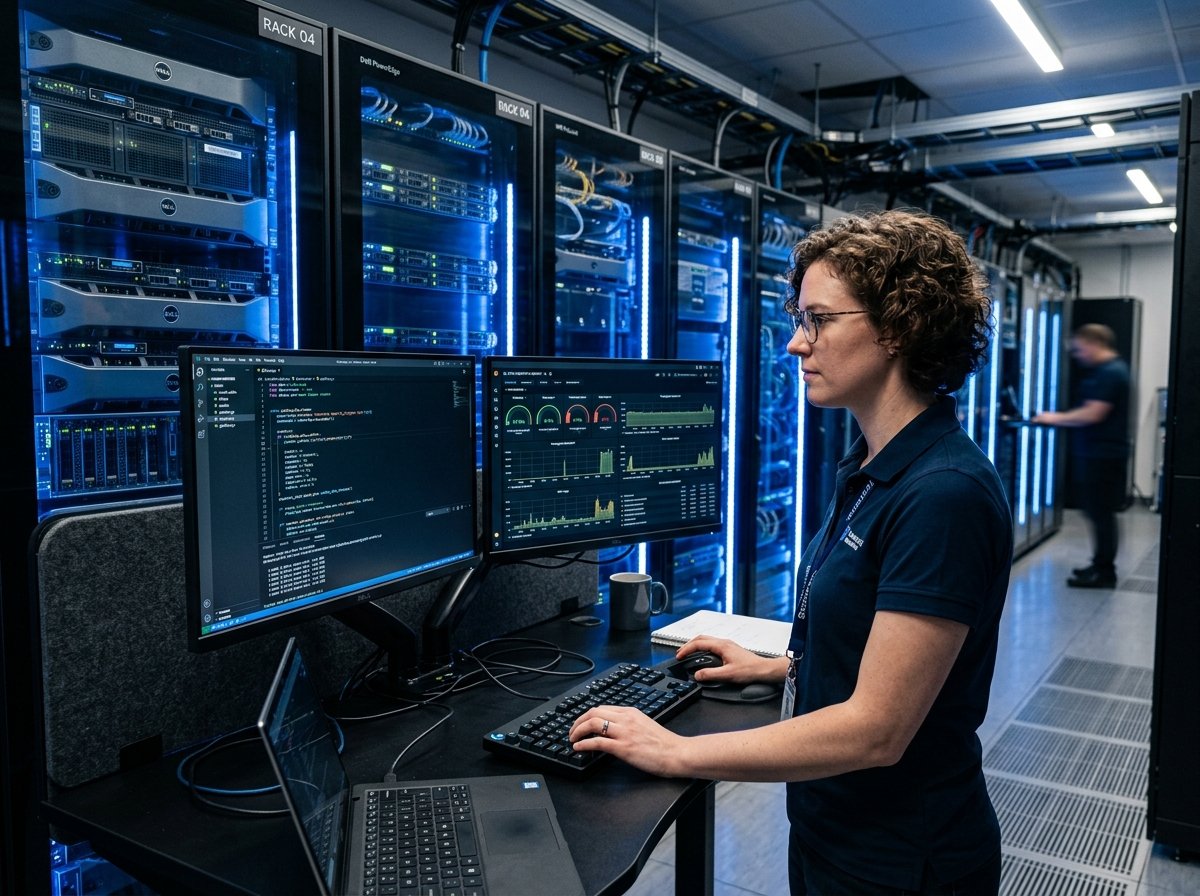 Modernization Workspace
Why Partner with Us for Legacy Modernization

Legacy Modernization Across Key Industries
Every industry carries legacy systems that matter for different reasons. We shape modernization roadmaps around what actually puts your business at risk if it breaks.
Modernize Without Breaking What Works
The systems you want to modernize are usually the ones your business depends on most. Our engineers start by understanding what must never break, then modernize around it.

Why Teams Rely on CodeBase Coders
for Legacy Modernization
Our modernization practice targets what makes these programs fail: touching systems before understanding them, big-bang rewrites, untested cutovers and lost institutional knowledge. Built into every engagement, these habits keep modernization safe.
Assess Before You Touch Anything
We map dependencies, data flows and risk before proposing any change, so decisions are based on how the system actually works, not assumptions.
Incremental, Not Big-Bang
Modernization happens in small, reversible steps where legacy and modern components coexist, instead of one high-risk rewrite.
Tested at Every Step
Every increment is tested against the legacy behavior it replaces, including edge cases and integrations, before it reaches production.
Continuity Comes First
Cutover plans include rollback paths and monitoring, so the business keeps running even if a step needs to be reversed.
Documentation That Survives the Transition
What the legacy system did, and why, is documented before it changes, so institutional knowledge is not lost in the modernization.
Modernize Legacy Systems Without the Risk.
From Stabilization to
Cloud-Native Architecture
Modernization usually happens in stages: stabilize and understand what exists, modernize and migrate the highest-risk pieces, then move toward a cloud-native architecture built for continuous change. We meet you where your systems are today.
Assessment & Stabilization
Map dependencies and technical debt, patch the most urgent risks, and build the modernization roadmap before any large change begins.
Reengineering & Migration
Refactor and containerize the highest-priority applications, and migrate them to modern infrastructure in controlled, tested increments.
Cloud-Native & Continuous Delivery
Move toward cloud-native, microservice-based architecture with CI/CD pipelines, so the system keeps improving instead of aging again.
Our Legacy Modernization
Process That Delivers
Change Without Disruption
We begin by understanding what the legacy system does and why it matters before proposing any change. Every stage produces something you can review, so modernization stays a controlled, transparent program.
Portfolio Assessment & Dependency Mapping
We inventory applications, map dependencies and data flows, and identify the technical debt and risk that matter most.
We sequence the work by business risk and value, and build a phased roadmap that fits your release calendar.
Modernization Roadmap & Prioritization
Architecture & Target-State Design
We design the target architecture, whether that is refactored code, containers, cloud-native services or a modernized mainframe.
We modernize in small, reviewable increments where legacy and modern components run side by side until each step is proven.
Incremental Refactoring & Migration
Testing & Validation
Every change is tested against the legacy behavior it replaces, including integrations, edge cases and failure scenarios.
Results are reviewed with your technical and business stakeholders before each increment moves to production.
Stakeholder Review & Sign-Off
Cutover, Monitoring & Stabilization
We cut over with a rollback plan in place, monitor closely and stay through a stabilization period before handing off to standard support.
We Innovate Legacy Modernization with Next-Generation Technologies
New tools help modernization move faster and with less manual effort, while every change is still reviewed before it reaches production.
As a modernization partner, we adopt new tools with purpose, using them where they speed up analysis or reduce manual, repetitive work, and only where the results are reviewed by engineers before they matter.
AI-Assisted Code Analysis
Machine learning helps analyze large legacy codebases and surface dependencies, dead code and risk areas faster than manual review alone.
Know MoreCloud-Native & Serverless Architecture
Cloud-native and serverless patterns let modernized workloads scale on demand and reduce the infrastructure a team has to manage directly.
Know MoreContainerized Microservices at Scale
Container orchestration lets modernized services deploy, scale and recover independently instead of as one fragile unit.
Know MoreAPI-Led Integration
Well-designed APIs let modernized systems connect to new services without exposing legacy internals directly.
Know MoreAutomated Regression & Migration Testing
Automated test suites compare legacy and modernized behavior continuously, catching regressions long before a human would.
Know MoreModernization Tools & Platforms We Work With
We choose tools for your systems and your team, favoring proven, well-supported platforms that are easy to run, maintain and hire for.
Modernized Systems Built on
Trusted Technologies
We modernize on proven cloud, container and integration technologies that engineering teams already know and trust.
Explore More
Engineering Services
Legacy modernization works best alongside strong integration, DevOps and delivery practices. Explore the services that pair with it.

Legacy Application Modernization FAQs
Didn’t Find What You Were Looking For?
We’ve got more answers waiting for you! If your question didn’t make the list, reach out directly to our Legacy Application Modernization experts.
Ready to Get Started With Legacy Application Modernization?
Speak with our senior engineers today. Receive a technical roadmap, project plan, and squad proposal in under 4 hours.