Logistics Software Development Services
Logistics software development services for shippers, carriers, 3PLs and distributors: transportation, warehouse, fleet and last-mile platforms that give you real-time visibility from order to delivery.


Most logistics teams run on a patchwork of spreadsheets, carrier portals and systems that do not talk to each other. Our logistics software development services connect those pieces into one platform, so orders, shipments, vehicles and stock are visible in one place and routine decisions can be automated.
Our Core Capabilities
Logistics Software We Build
Our Suite of Logistics Software Development Services
From the first dispatch screen to a full supply chain platform, our logistics software development services cover every stage of moving goods. Start with the system that hurts most today and connect the rest as you grow.
Transportation Management Software (TMS)
We build TMS platforms for load planning, carrier selection, dispatch, freight documentation and invoicing, so shipments move on time with fewer phone calls.
Shipments assigned to the right carrier, vehicle and driver.
Contracts, rates and tenders managed in one place.
Warehouse Management Systems (WMS)
We build WMS software for receiving, putaway, picking, packing and shipping, with barcode and RFID scanning and real-time stock levels.
Wave, batch and zone picking guided on handheld devices.
Locations, cycle counts and stock movements kept in sync.
Fleet Management Software
We build fleet management software that tracks vehicles, drivers, fuel and maintenance, using telematics data to keep the fleet safe and productive.
Live location, trip history and driver behavior.
Service reminders based on mileage, hours and fault codes.
Last-Mile Delivery Software
We build driver apps, dispatcher consoles and customer tracking pages for fast, predictable final-mile delivery.
Optimized stops, photos, signatures and barcode scans.
ETAs and notifications that cut "where is my order" calls.
Shipment Tracking & Supply Chain Visibility
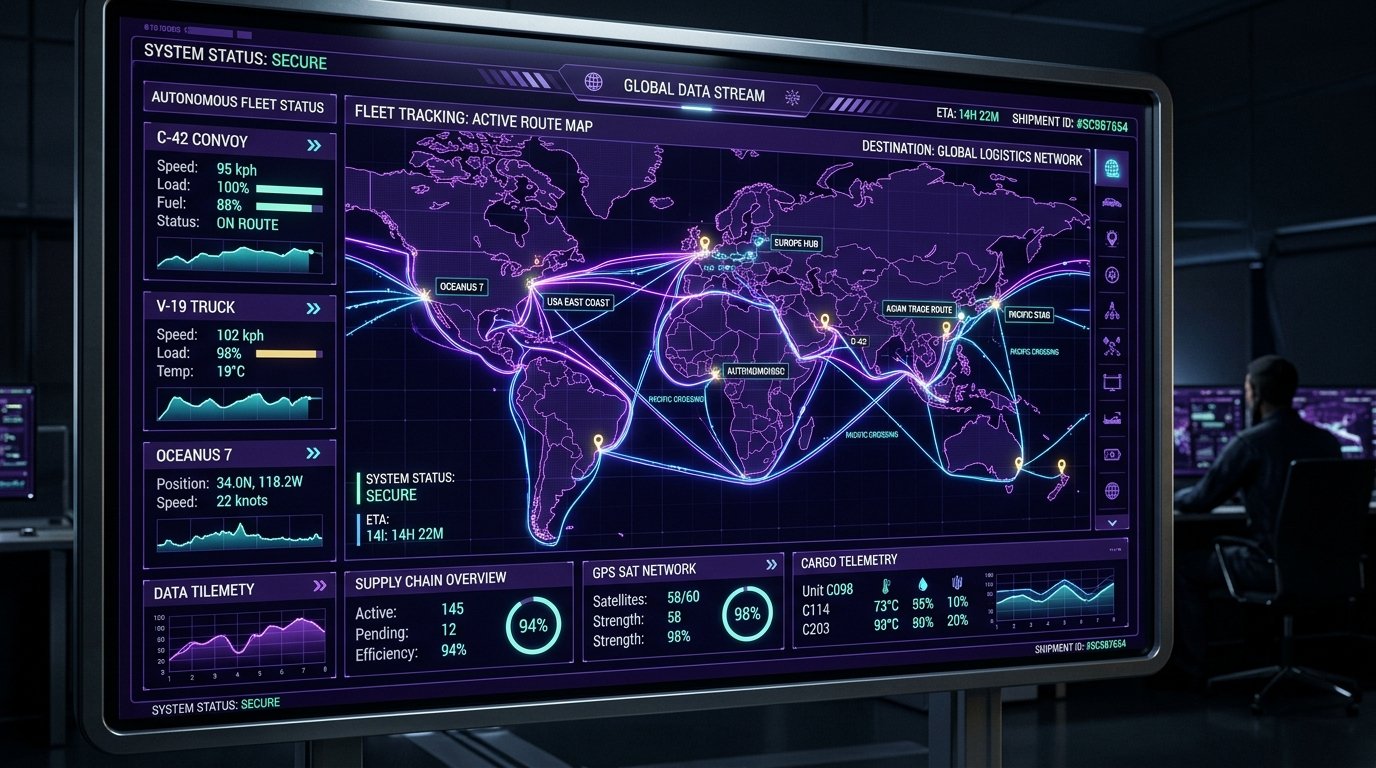
We combine carrier feeds, GPS, telematics and IoT sensors into one tracking view, with alerts when a shipment is late, off-route or out of temperature range.
Road, ocean, air and parcel shipments on one screen.
Delays and condition breaches flagged before customers notice.
Order & Inventory Management Systems
We build order and inventory platforms that sync stock, orders and fulfillment across warehouses, stores and marketplaces.
One accurate stock picture across every site.
Reorder points and purchase suggestions based on demand.
Logistics Analytics, AI & Route Optimization
We turn operational data into dashboards, demand forecasts, ETA predictions and optimized routes that planners can review and adjust.
Fewer miles and better-filled vehicles.
On-time, cost-per-shipment and capacity trends at a glance.
Logistics System Integration & Modernization
We connect TMS, WMS, ERP, e-commerce, carrier and telematics systems through APIs and EDI, and modernize legacy logistics software in safe stages.
Orders, shipments and invoices flowing without re-keying.
Aging systems replaced without stopping operations.
 Fleet & Shipment Control Tower
Why Partner with Us for Logistics Software Development

Logistics Software Development for Every Segment
A freight broker, a cold-chain distributor and a same-day courier all move goods, but their workflows look nothing alike. We shape logistics software around the segment you operate in and the partners you work with.
Logistics Software Built Around How Your Teams Work
Dispatchers, warehouse staff and drivers do not have time to fight their tools. Our engineers spend time with the people who run your operation, so the software removes steps from their day instead of adding them.

Why Teams Rely on CodeBase Coders
for Logistics Software Development
Logistics software projects tend to fail in familiar ways: systems that cannot exchange data, apps that break without signal, and dashboards nobody trusts. These five habits are built into every engagement to avoid them.
Workflow-First Design
We map how freight, stock and information actually move through your operation, on the dock, in the cab and at the planning desk, before we design a single screen.
Integration by Default
We design APIs and data models so the platform exchanges data with your ERP, carriers, marketplaces and telematics providers from day one, instead of becoming another silo.
Built for the Field
Driver and warehouse apps work offline, sync when the signal returns, and are designed for gloves, scanners and quick one-handed use.
Real-Time, at Scale
Event-driven architecture handles streams of location pings, scans and status updates, and is load-tested for peak season before it matters.
Secure & Auditable
Role-based access, encryption, audit trails and secure partner APIs protect shipment, customer and pricing data, and the design is documented for your reviewers.
Move Goods Faster With Software Your Teams Trust.
From Manual Workflows
To a Connected Logistics Platform
Logistics platforms usually grow in stages: first replace spreadsheets and phone calls in the most painful workflow, then connect carriers, warehouses and customers, then use the data to plan and optimize.
Digitize the Core Workflow
Launch a focused system, such as dispatch, a driver app or warehouse picking, that replaces manual work where it hurts most.
Connect the Network
Integrate ERP, carriers, marketplaces and telematics so orders, shipments and invoices flow without re-keying.
Plan & Optimize
Use the data the platform collects for route optimization, demand forecasting and KPI dashboards that guide planners.
Our Logistics Software
Development Process From
Dock to Doorstep
We start with how goods and information move through your operation, not with a feature list. Every stage produces something your operations, IT and finance stakeholders can review.
Workflow Discovery & Operational Assessment
We walk through transportation, warehouse and fleet processes with your teams, and document the systems, data and pain points involved.
We design a scalable architecture and map every integration: ERP, carriers, marketplaces, telematics and partner EDI.
Architecture & Integration Planning
UX for Dispatch, Dock & Driver
We design screens for each role, from dense planner dashboards to glove-friendly scanner and driver apps, and test prototypes with real users.
We build in short iterations with regular demos, delivering the most valuable workflow first and connecting systems as we go.
Agile Platform Development
Tracking, Telematics & Analytics Integration
We connect GPS, telematics, IoT sensors and barcode or RFID scanning, and build the dashboards and alerts on top.
We run functional, integration, security and load testing with realistic volumes, including peak-season scenarios and offline field use.
Testing, Security & Peak-Load Validation
Rollout, Training & Continuous Optimization
We roll out site by site or lane by lane, train your teams, then keep monitoring, supporting and improving the platform.
We Bring Next-Generation Technologies into Our Logistics Software Development
Logistics is becoming more automated and more predictive. We adopt new technology where it saves miles, minutes or mistakes, with planners staying in control.
As a logistics software development company, we introduce new technology deliberately: where it makes operations faster, safer or more predictable, and where the results can be measured and explained to the people running the operation.
AI Route Optimization & Forecasting
Machine learning models suggest routes, loads and staffing levels based on orders, traffic and history, while planners review and adjust the plan.
Know MoreIoT & Telematics Visibility
Connected sensors and telematics stream location, temperature and vehicle health data, so problems are caught while there is still time to act.
Know MoreWarehouse Automation & Robotics
Software that coordinates people with conveyors, scanners and autonomous mobile robots, so automation fits the workflow instead of disrupting it.
Know MoreDigital Twins & Control Towers
A live model of your network brings orders, shipments, stock and capacity into one view, and lets you test changes before making them.
Know MoreCloud-Native Logistics Platforms
Containerized services and automated pipelines let logistics platforms scale for peak season and release updates without downtime.
Know MoreLogistics Software Development Technologies We Work With
We choose tools for your operation and team, favoring proven, widely adopted technologies that scale, integrate cleanly with logistics systems and are straightforward to hire for.
Logistics Platforms Built on
Proven Technologies
We build logistics software on proven cloud platforms, open standards and integration tools that operations and IT teams already know and trust.
Explore More
Logistics & Supply Chain Services
Logistics software rarely stands alone. Explore the services that help integrate and scale it, and the industries we build logistics platforms for.





Logistics Software Development Services FAQs
Didn’t Find What You Were Looking For?
We’ve got more answers waiting for you! If your question didn’t make the list, reach out directly to our Logistics Software Development Services experts.
Ready to Get Started With Logistics Software Development Services?
Speak with our senior engineers today. Receive a technical roadmap, project plan, and squad proposal in under 4 hours.